

Case Study: Warehouse Management System (WMS) Implementation
Digitally transforming warehouse operations for real-time traceability, reduced labor dependency, and improved Turnaround Time.
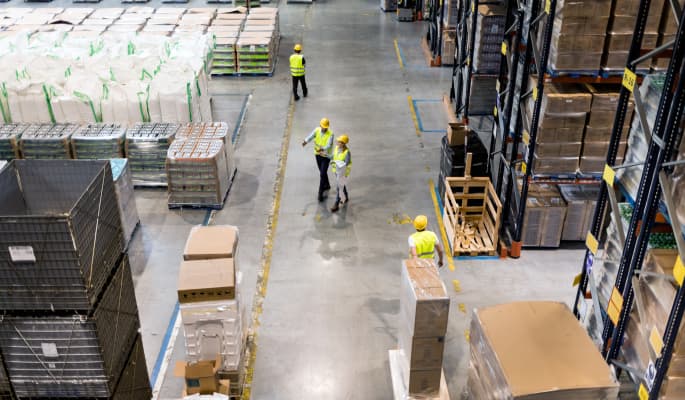
Objective
The objective was to digitally transform warehouse operations for a retail warehouse by enabling real-time material traceability, reducing dependency on manual labor, improving Turnaround Time (TAT), and gaining complete visibility into inventory ageing and movement.
Business Problem
The warehouse faced operational inefficiencies due to manual processes and limited system intelligence, resulting in delayed store replenishment.
- Material traceability was a major issue
- Significant time wasted searching for material
- High manpower engagement for fetching
- Delivery to stores was impacted and delayed
Strategic Framework & Solution
Methodology: RICE framework used to prioritize automation and traceability features.
Setup
Requirements gathering and data migration.
Pilot
Controlled testing with selected warehouse zones.
Rollout
Gradual deployment across all warehouse areas.
Optimization
Monitoring, refinement, and continuous improvement.
Solution Overview
A requirement-based configuration utilizing QR-code enabled SKU-level tracking and rule-based automation across inbound, storage, and outbound processes.
Key Features Implemented
Inbound & Storage
QR Code traceability, visual rack management, criteria-based putaway
Inventory Management
Real-time visibility, ageing tracking, cycle counting, bin consolidation
Outbound & Picking
Auto picklist generation, optimized routes, single & bulk pickup
Analytics
Power BI integration, REM lookup tools, live dashboards
Before vs After Comparison
Deployment Impact & Business Value
Reduction in Material Search Time
Improvement in TAT
Reduced Operational Costs
Increase in Customer Satisfaction
Client Portfolio
Multi-Industry Retail & Logistics Portfolio
- Industries: Manufacturing, Retail, Third Party Logistics (3PL)
- Scale: Multi-SKU, High Volume, Seasonal Demand
Industry Use Cases
The WMS solution is applicable across multiple industries requiring real-time traceability, compliance, and scalable warehouse operations.
- Food & Beverage — Lot tracking, expiration date management, temperature control
- Pharma & Healthcare — Regulatory compliance, batch traceability, chain-of-custody
- Omni-channel — Seamless processing across online, in-store, and mobile
SWOT Analysis
Strengths
- Real-time material traceability and inventory visibility
- Reduced dependency on manual labor
- Scalable architecture supporting multi-warehouse expansion
- Seamless integration with ERP and analytics
Weaknesses
- Initial setup can be resource-intensive
- Requires staff training for new technology
- Potential resistance to change from employees
Opportunities
- Expansion to additional warehouse locations
- Integration with IoT and AI for further automation
- Enhanced customer satisfaction through faster fulfillment
Threats
- Cybersecurity risks and data management
- Potential for system downtime impacting operations
- Rapid regulatory or technology changes
Conclusion
The implementation of the Warehouse Management System, guided by the RICE prioritization framework, has delivered significant improvements in warehouse efficiency, traceability, and operational scalability. By focusing on automation and real-time visibility, the solution has reduced manual labor, accelerated order processing, and enhanced inventory accuracy. This case study demonstrates the value of a structured, scalable approach to digital transformation in warehouse operations, setting a strong foundation for future growth and innovation.
Want similar results?
Let's talk about how Gemba Connect can deliver measurable outcomes for your operations.
Let's Build Your Operations Platform
Ready to transform your operations? Fill out the form and our team will reach out within 24 hours.
Email us
sales@gembaconnect.in
Response time
Within 24 hours
Mon – Sat, 9 AM – 6 PM IST
Locations we serve
India
Headquarters
UAE
Middle East Operations
Africa
Africa Operations
Serving manufacturing, logistics, and distribution companies across India, Middle East & Africa.